


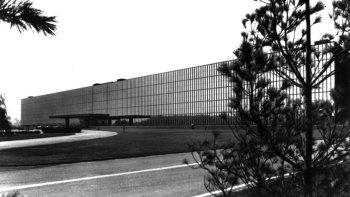
Bell Labs as Innovator
 tms
tms
 April , 2026
Bell Labs as Innovator
Learning from Bell Labs as Innovator
What has been a key turning point in your life? For me, graduating from college with a Bachelor’s in math and then hiring on with AT&T Bell Laboratories as a ‘Member of Technical Staff’ (or MTS) was a game changer. I was dropped into a culture surrounded by brilliant, curious people with a charter to innovate. Was it destiny or luck? It was, in the words of Oprah Winfrey, “preparation meeting opportunity.” Now using what I learned in my career at Bell Labs and beyond, I help organizations and leaders successfully innovate.
The Bell Labs Story
Bell Telephone Laboratories, the legendary research and development organization, was an innovation engine founded in January 1, 1925 as the research entity of AT&T, now part of Nokia. Its roots came from Alexander Graham Bell, the telephone’s inventor.
Jon Gertner, author of The Idea Factory: Bell Labs and the Great Age of American Innovation, was featured recently in a Wall Street Journal article, “What the Legendary Bell Labs Can Teach Us About Innovation.” As he reminds us,
“Consider just a partial list of what emerged from Bell Labs: transistors, cellphone networks, telecommunications satellites, early lasers, solar power, digital imaging, digital transmission, transoceanic phone cables, the UNIX operating system, the C programming language. At nearly any moment of a day — at your coffee maker, on your computer or television, in your car, on your iPhone — you are tapping in to the legacy of Bell Labs’ work. Its technologies not only pervade the modern world; they buttress the global economy.”
Practical Pointers for Innovation Success at Bell Labs
- INNOVATION AS A CORE VALUE. Bell Labs defined innovation as a new product or process that achieved both impact and scale. This was measured, in one way, by the number of patents (over 30,000) as well as the number of Nobel Prizes (11) attributed to its scientists and engineers. Bell Labs worked to protect this innovative Intellectual Property through patents, and it had a strong team of patent attorneys.
- MISSSION AND VISION BASED ON INNOVATION. Bell Labs had a clear purpose combined with long-term thinking. To support this mission, it made huge and continuing investments in R&D. Because it was a profitable monopoly, it had the resources to do this.
- SUPPORT OF TALENT AND LEARNING. Hire curious, not just smart, people. Bell Labs invested in the best and the brightest, including forward-looking visionary leaders. It believed in higher education. To that end, it even sponsored a Graduate Study Program which paid for technical employees to get graduate degrees at the top universities in the nation. (Thanks to Bell Labs, I spent ‘One Year On Campus’ at Stanford University getting my Master’s in Operations Research. My husband and entrepreneurial partner, whom I met at Bell Labs, participated in the Bell Labs Doctoral Support Program and received a Ph.D. from Columbia University.)
- STRUCTURE. This came from the people, organization, and the workplace. People, with different personalities and backgrounds, would converse with each other, using a “friction of ideas and approaches.” Campuses were set up so that “scientists and engineers would be forced to walk, mingle and engage in serendipitous conversations and debate ideas.” Before the AT&T monopoly was forced in the Divestiture of January 1, 1984 to break up, AT&T “could move theoretical and applied research into a huge manufacturing division that made telecom equipment (Western Electric) and ultimately into a dynamic operating system (AT&T Long Lines and the Bell Operating Companies).”
- RECOGNIZING NEED. Bell Labs people generated ideas to solve important problems.
- PROCESS. Bell Labs had an Innovation Process to harness insights, gain ideas, invent, implement, and make an impact. The Labs embraced change and measured ROI.
- LUCK. Gertner says, “Bell Labs was the right organization, working in the right field of electronics, at the right moment in time.” I, Theresa, was lucky to be there.
Summary
There is a formula for success through innovation. The best innovative companies build an innovation culture. They set innovation as a core value; have a mission, vision, and purpose to innovate; attract the right talent who keep learning; are structured to stimulate innovation and its implementation; recognize problems to solve; and have a persistent innovation process; they also are lucky. As Oprah Winfrey says, “Luck is a matter of preparation meeting opportunity.” Be lucky.
In the next edition of this newsletter, I will combine the Bell Labs learnings with mine and other successful innovators to offer an “Innovation Readiness Indicator.” Stay tuned.
New Website and Connect on LinkedIn
Do you like my newly revised TMSworld.com website? Please provide feedback. Let’s also connect on LinkedIn. Please send me a connection request and follow the Technology and Management Solutions page.
Book Theresa to Coach, Speak, Facilitate, and Consult
Let The Catalyst for Extraordinary Results help you and your organization grow to new heights in profit, productivity, and passion. See Theresa in action. Theresa’s engaging presence, original stories, actionable insights, humor, wide ranging experiences, and practical pointers have earned her top speaker, facilitator, and consultant rankings at many events and with a wide range of business clients. See examples of Theresa’s speaking programs and consulting services.
Emily Jarvis at GovLoop said, “Of all the keynoters I’ve worked with, Theresa is among the best.”
As Deana Rich, Co-CEO of Infinicept, said, “It is with great confidence that I recommend Theresa Szczurek as an executive coach. I had the privilege of working with her during a time of significant transition at my company, and her guidance proved to be both timely and invaluable. What stood out immediately about Theresa was her ability to draw from real-world experience.”